
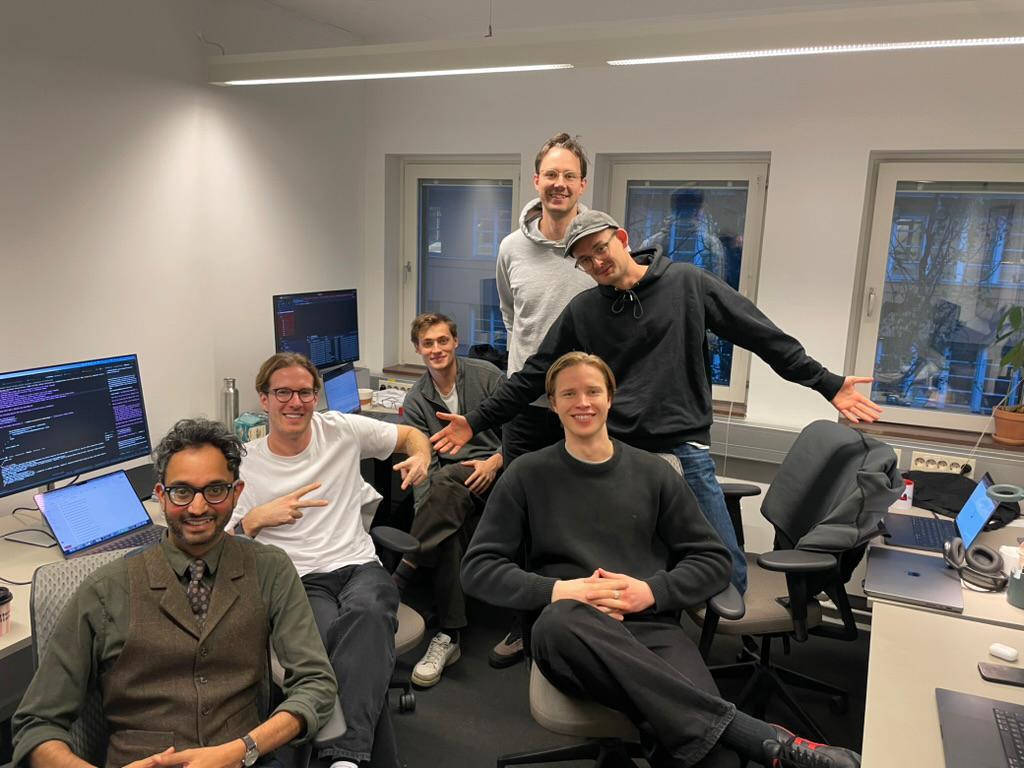
New investment in Emfas

The team at Emfas has built an AI-native Product Information Management (PIM) system that automates and streamlines e-commerce operations for brands and retailers. They connect product catalogues to AI-powered workflows with no developers or integration costs needed. We are thrilled to join Emfas's EUR 1.1M raise alongside daphni and look forward to supporting Vidar Trojenborg, Rasmus Guterstam, and Carl Piehl on their journey.
Joining Emfas on their Agentic Commerce Journey
Back in the 2000s it wasn’t unusual to physically go to 5 different stores to buy the different things we needed to. It also meant some of us would need to dedicate entire days to pick up the items we had been putting off. The dynamics of shopping have changed since then: it’s now much easier to get an easy overview to see what’s available and have it delivered to your door. When you buy a pair of jeans or a shirt online, the experience feels effortless. A few taps on your phone and the package is on its way.
However, if you were to peek behind the curtain at the brands powering these transactions, you would see a very different reality. A chaotic, high-stakes scramble involving fragmented spreadsheets and manual data entry just to get a single product live on a website.
As investors at node.vc, we look at hundreds of AI startups promising to revolutionise retail. Most of them are building flashy storefront widgets or new ways to generate marketing copy. But when we met Vidar, Rasmus, and Carl, they weren’t talking about widgets. They were talking about plumbing. They understood that the foundation of digital commerce is fundamentally broken, and that fixing it isn't just about saving time today: it is about survival in the rapidly approaching era of agentic commerce.
This is why we, alongside our friends at daphni, are thrilled to announce our €1.1m investment in Emfas.
Automating the Undesirable
When we first met the Emfas team, what struck us most was their timing and their target. We live in an age where there is widespread anxiety about AI making average jobs redundant or disrupting creative work. But Emfas is building in a space that is practically begging for automation. They have found a problem that desperately needs to be solved by AI simply because no one actually wants to do the work.
Managing product data is a repetitive and deeply unglamorous niche. Yet, as e-commerce scales, the volume of this work is only increasing. The Emfas team recognise that this isn't about replacing humans in jobs they love; it is about deploying AI to handle a fragmented, undesirable burden so that brands can focus on what actually matters. Creativity and growth. That realisation was our moment of conviction.
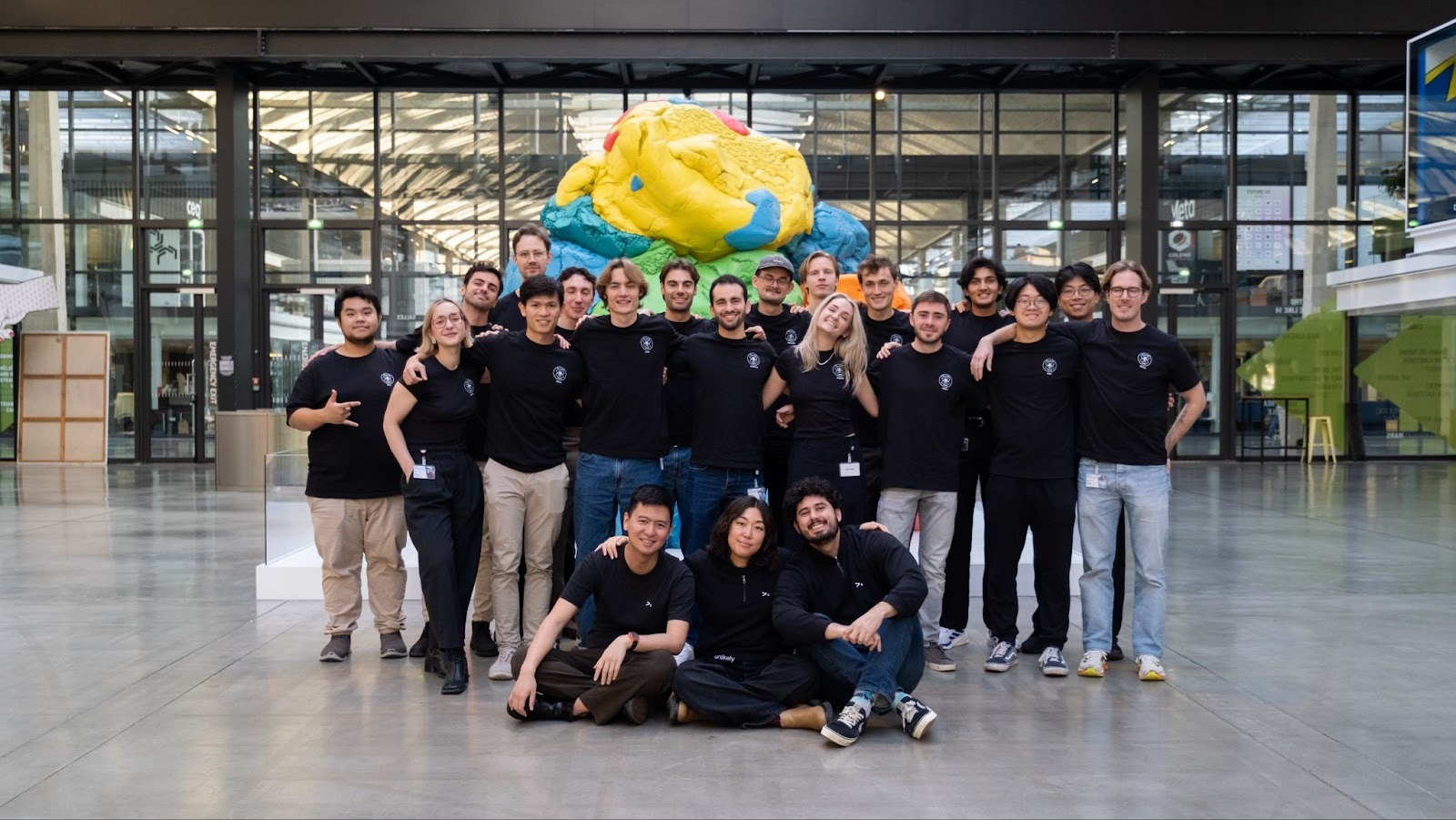
Emfas in November 2025 at pluto house; Paris, France. Taken at Station F
… And at the core of it all, was the human dimension - which is ultimately what often lies at the heart of VC. Soo Min got to work hands on and close with the team when they joined pluto house (which, Soo Min is also a Co-founder of) for 1 month in Paris. Her conviction in this team goes beyond their resumes. She saw their obsession, how fast they iterated. How willing they were to absorb feedback, and crucially, how fiercely they pushed back when it mattered. She got to know the humans behind the code: turns out Vidar used to sing opera, Rasmus is a fellow Super Smash Bros aficionado, and Carl (and actually, Rasmus, too) has an inexplicably strong sensitivity to certain smells - an inside reference that became part of their daily rhythm in Paris. The team’s first hires are also great fun. Hugo (Founding Engineer) can eat a never-ending mountain of food. And Niklas (also, Founding Engineer) has the deepest curiosity when it comes to the topic of VC Maths. In true VC fashion, Soo Min is not only bullish when it comes to the area Emfas are growing in; she sees that this is the right team to build this. And from her intensive time with them, she’s stacked her own deep bets on why these are the people that will take a business like Emfas from zero to hero.
The "Unsexy" Problem Hiding a Massive Opportunity
To understand the scale of what Emfas is building, it helps to understand how broken the current system is. In the industry, this is known as Product Information Management (PIM), a category that sounds incredibly boring, yet serves as the absolute lifeblood of retail.
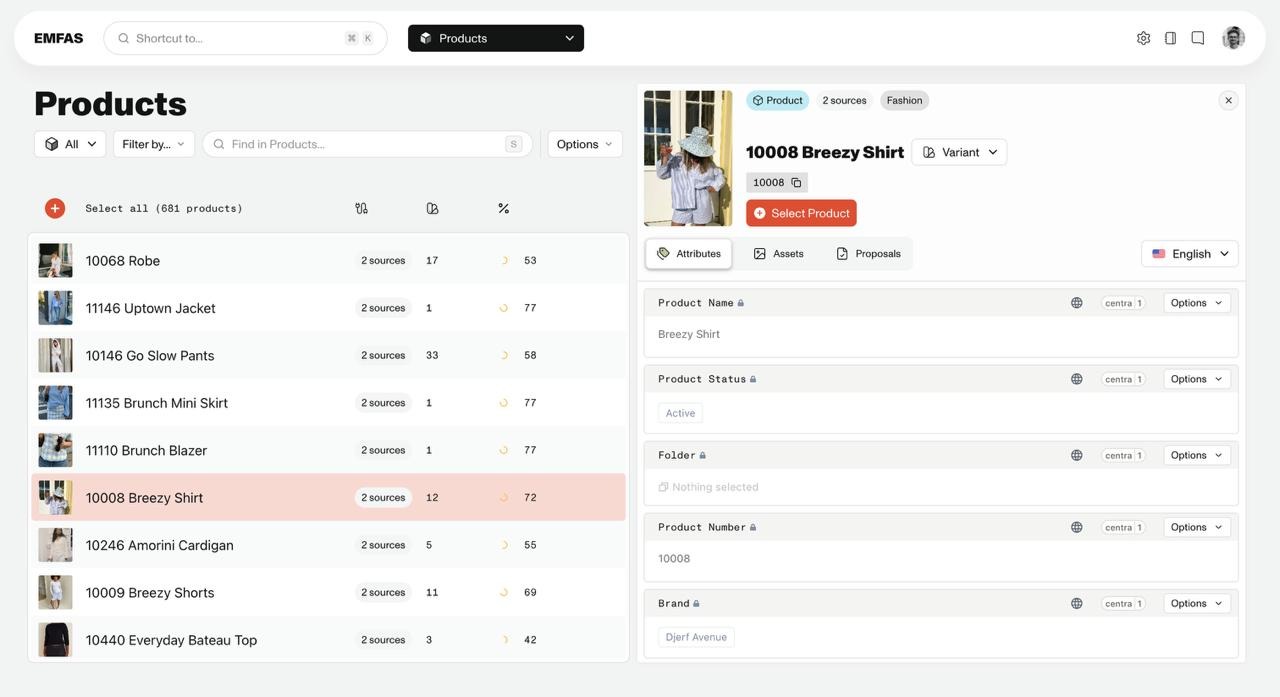
Imagine a brand launching a new collection of winter coats. Before a customer can ever click "Add to Cart," the brand has to gather information from multiple different suppliers. One supplier might send fabric details in a messy Excel file. Another might send sizing charts in a PDF. Someone on the brand's team has to manually copy and paste all of this into their own system.
But it doesn't stop there. That raw data then needs to be turned into a compelling product description. It needs SEO keywords so it shows up on Google. It needs to be translated into five different languages for international stores. And finally, it has to be formatted perfectly to meet the strict, entirely different rules of platforms likeShopify, Google Shopping, Amazon, and Meta.
Today, this process is almost entirely manual. It requires teams of people passing files back and forth, executing 10 to 15 rounds of corrections per product. It turns what should be a swift launch into a weeks-long ordeal. The cost of this inefficiency is staggering: delayed launches mean missed revenue during peak demand, while inaccurate data erodes buyer trust and drives up return rates.
Emfas is doing for product data what Shopify did for storefronts. They have built an AI-native platform that connects directly to commerce engines like Centra and Shopify, automating this entire chaotic workflow. By using context-aware AI to clean, standardise, and enrich data while strictly enforcing a brand's unique tone of voice, Emfas allows retailers to launch products in seconds, not days.
The Tipping Point
Solving the operational headache of catalogue management is a massive business on its own. But our conviction in Emfas stems from a much larger, structural shift happening in consumer behavior. We are moving rapidly toward a world where consumers no longer browse websites themselves. Instead, they will deploy autonomous AI agents to navigate options, compare specifications, negotiate deals, and execute transactions on their behalf.
This shift presents an existential threat to brands. AI shopping agents do not care about beautiful website design or clever marketing copy; they care about structured, complete, and highly accurate product data. If a brand's catalogue is messy, incomplete, or lacks standardised categorisation, their products become literally invisible to the AI models making purchasing decisions.
Emfas is the bridge to this new reality. They are not just an operational tool; they are the critical infrastructure required to make brands "AI-discovery ready." By ensuring that every product attribute is perfectly structured and enriched, Emfas guarantees that their customers will be found when the AI agents come shopping.
Build the Engine of the AI Economy
We are at the very beginning of the agentic commerce revolution. The interfaces of the internet are changing, and the underlying infrastructure must be entirely rebuilt to support them.
This brings us to why we are writing this. Emfas is growing rapidly, and they are hiring heavily across engineering and GTM roles in Stockholm.
If you want to solve a massive, complex, "unsexy" problem that serves as the actual engine for global commerce, if you want to build the foundational layer that will allow the world's best brands to thrive in the AI era, then you should be talking to Emfas.
We couldn't be more excited to partner with Vidar, Rasmus, Carl, and the rest of the team on this journey. The future of commerce is agentic, and Emfas is building the rails it will run on.